
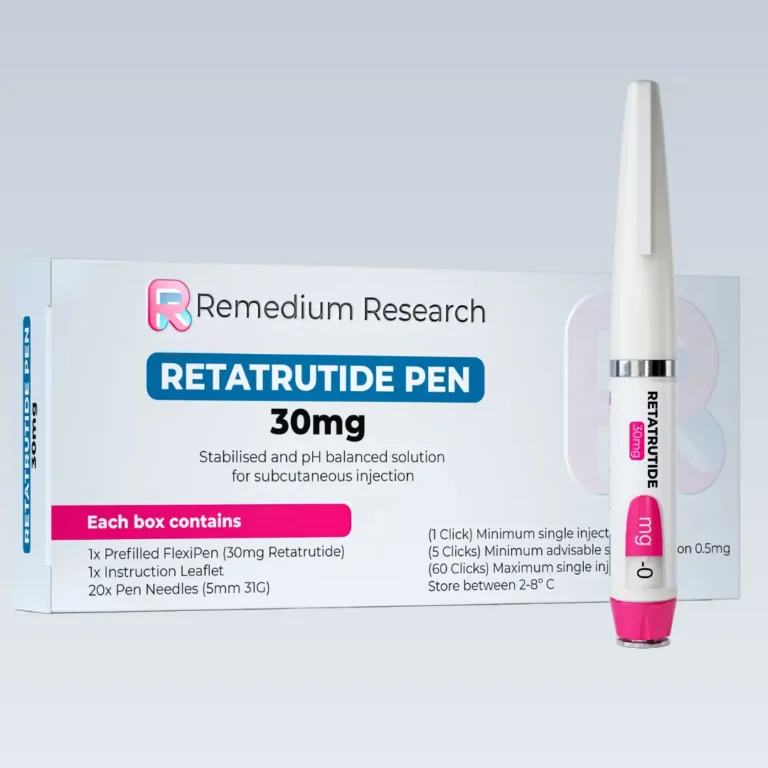
Elite Metabolic Investigation: Remedium Research Retatrutide 30mg
In the rapidly evolving field of metabolic and endocrinological science, the emergence of unimolecular multi-receptor agonists has shifted the paradigm of weight regulation and glycemic control studies. At the forefront of this scientific breakthrough is a novel class of compounds designed to simultaneously engage three distinct hormonal pathways. For laboratory professionals and principal investigators dedicated to exploring these advanced synergistic mechanisms, Remedium Research Retatrutide 30mg offers an unparalleled, high-purity compound formulated exclusively for rigorous in vitro and animal model investigations.
This specific compound represents a significant leap from traditional dual-agonists, providing researchers with the necessary molecular tools to study complex metabolic cascades, cellular respiration rates, and advanced physiological signaling pathways in a controlled laboratory setting.
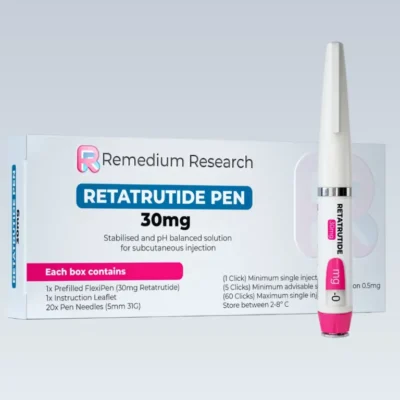
The Scientific Mechanics Behind Remedium Research Retatrutide 30mg
To understand the immense research value of this compound, it is critical to examine its foundational molecular architecture. Traditional incretin mimetics typically target either the Glucagon-Like Peptide-1 (GLP-1) receptor or a combination of GLP-1 and Glucose-Dependent Insulinotropic Polypeptide (GIP). However, Remedium Research Retatrutide 30mg introduces a third critical element: glucagon receptor agonism.
Because it binds to all three of these receptors simultaneously, it is scientifically classified as a “triple-agonist” or a “triple-G” peptide. This unique structural engineering blends the appetite-suppressing and insulin-regulating properties of GLP-1 and GIP with the energy-expenditure boosting effects of glucagon. For ongoing insights into how unimolecular triple-agonists perform against dual-agonists in clinical observation, researchers frequently reference data curated by ClinicalTrials.gov.
How Remedium Research Retatrutide 30mg Modulates GLP-1, GIP, and Glucagon
When introduced to target cell cultures or specialized metabolic research models, Remedium Research Retatrutide 30mg acts on the three receptors in a highly coordinated manner:
-
GLP-1 Receptor Activation: Slows gastric emptying and stimulates glucose-dependent insulin secretion, providing a baseline for blood sugar regulation.
-
GIP Receptor Activation: Works in tandem with GLP-1 to further enhance insulin response while simultaneously modulating lipid metabolism.
-
Glucagon Receptor Activation: This is the distinguishing factor. While glucagon typically raises blood sugar, in this triple-agonist configuration, its primary role is to trigger hepatic lipid oxidation and increase overall baseline energy expenditure (thermogenesis) without causing hyperglycemia.
The harmonious balancing of these three pathways makes this peptide an exceptional subject for advanced metabolic assays. For peer-reviewed literature detailing the specific binding affinities of these receptors, researchers often consult databases such as PubMed (NCBI).
Laboratory Applications of Remedium Research Retatrutide 30mg
The primary utility of this compound lies in its broad application across various fields of preclinical science. Researchers studying non-alcoholic fatty liver disease (NAFLD), obesity-induced metabolic syndrome, and type 2 diabetes pathophysiology will find Remedium Research Retatrutide 30mg to be an invaluable asset.
Because the peptide significantly alters how cells process and store energy, it is frequently utilized in studies measuring lipolysis rates in adipocytes, hepatic glucose production, and changes in resting metabolic rates in biological models.
Investigating Metabolic Synergy with Remedium Research Retatrutide 30mg
One of the most pressing questions in modern endocrinology is how glucagon receptor activation can be safely harnessed for weight reduction without elevating glucose levels. By utilizing Remedium Research Retatrutide 30mg in experimental setups, scientists can isolate the glucagon-mediated effects on liver fat reduction and energy burning while observing how the GLP-1 and GIP components successfully buffer the glycemic output. Detailed analyses on the liver-specific outcomes of triple-agonists have been thoroughly documented in leading journals such as the New England Journal of Medicine (NEJM).
Handling, Reconstitution, and Storage Protocols for Remedium Research Retatrutide 30mg
Maintaining the structural integrity of this unimolecular peptide is paramount to achieving accurate and reproducible experimental data. Remedium Research Retatrutide 30mg is supplied as a lyophilized powder and must be handled with precise care.
-
Reconstitution: It is highly recommended to reconstitute the lyophilized powder using sterile bacteriostatic water or a specialized diluent appropriate for the specific in vitro assay. Agitation or aggressive shaking must be avoided; instead, gently swirl the vial to allow the powder to dissolve completely, preventing peptide chain degradation.
-
Storage: Prior to reconstitution, the lyophilized vials should be stored at temperatures between -20°C and 2°C, out of direct light. Once reconstituted, the liquid solution must be refrigerated immediately (between 2°C and 8°C) and utilized within the timeframe dictated by your laboratory’s stability protocols.
Compliance and Research Safety Considerations
It is strictly imperative to note that Remedium Research Retatrutide 30mg is an investigational research chemical. It has not been approved by the FDA or any global regulatory body for human consumption, therapeutic use, or clinical treatment. This product is strictly distributed for use by qualified researchers and laboratory professionals in controlled scientific environments. Standard laboratory safety protocols, including the use of personal protective equipment (PPE) and proper biohazard disposal, must be strictly enforced when handling this compound.
Be the first to review “Remedium Research Retatrutide 30mg”
Related products

Reviews
There are no reviews yet.